


Do's and Dont's of leader when you are new.
As a young officer in the civil service, I received a great piece of advice from a boss, rather high-ranking in the service. She was generally feared, and impossibly glamourous. The young officers would examine her impeccable hair, her classic-yet-fashionable outfits and her subtly rebellious heels to alleviate our boredom during meetings and discuss them at length over lunch. I asked her: what’s the most important thing to do in a new role?
“I don’t make any big moves for 6 months. I watch and I listen,” she said.
I thought this was ballsy and counter-intuitive. The human tendency, especially the more senior and prominent you are, is to enter with guns blazing, ready to “make a difference”. Assert your stance. Establish your legacy. Show your value.
It takes a different kind of strength to practice the first principle of Systems Thinking, to leave your ego behind, and to acknowledge that the system is so much bigger than you. It takes wisdom to know that meaningful change cannot happen without knowing how the system operates in ways both seen and unseen. She taught me the second principle of Systems Thinking – see the system for what it is, not what you want it to be.
How exactly do we “see” the system? What are we looking for, or at? To answer this, let’s go back to the trusty bathtub analogy as a system.
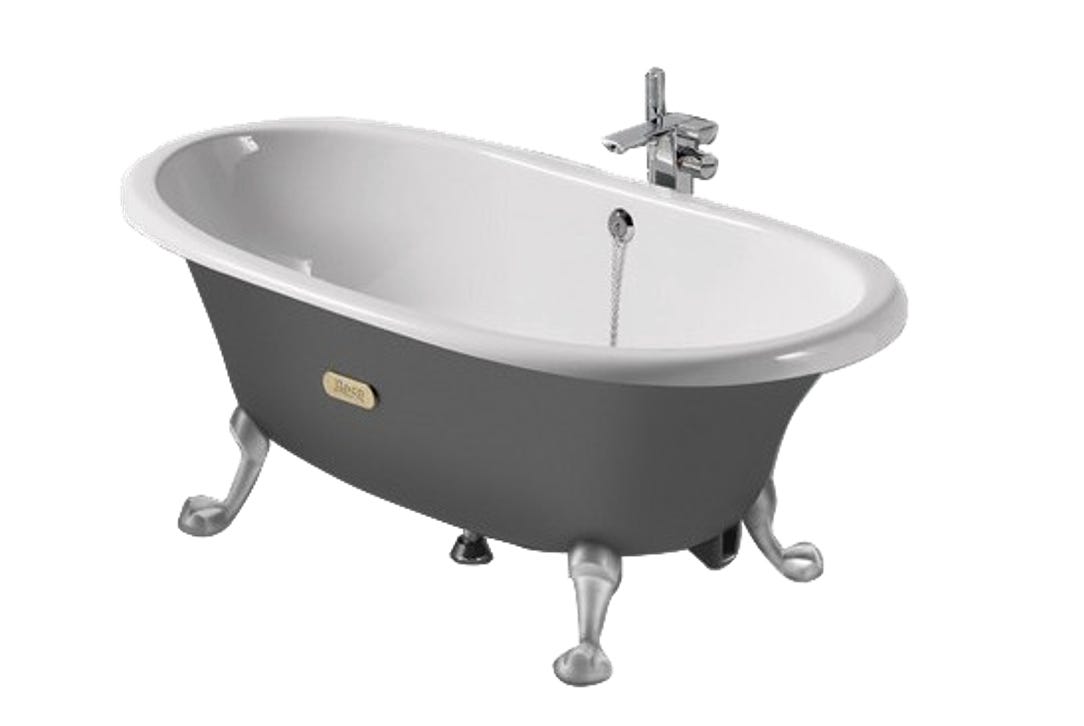
Here’s my Bathtub Challenge. Take a pen and paper, set a 30-second timer on your phone. Do the following 3 activities in sequence - DON’T PEAK at the answers in between!
Q1: In 30 seconds, list as many components of this system as you can think of.
Q2 : 1n 30 seconds, list as many different functions of this system as you can think of.
Q3: Now based on these functions, go back to No.1 and list as many components of this system as you can think of.
For Q1, you might have listed the tub, faucets, pipes, brand label, drain, mixers, shower heads, curtains, legs. The more imaginative ones amongst you might also have written rubber ducky, soap, bubbles, shampoo.
I love doing Q2 at workshops - I get to see how creative participants can get. Answers can range from the obvious (“get clean”, “relaxation”), to the practical (“wash clothes”, “tie-dye”, “storage”, “earthquake shelter”, “store water during drought”, “keep beers cold for parties”), to really wild (“film a murder scene”).
By the time we are at Q3, the answers are coming fast and furious - a body, bin bags, knife, emergency kit, clothes dye, beers, ice, laundry detergent…
What do these 3 activities combined demonstrate about systems?
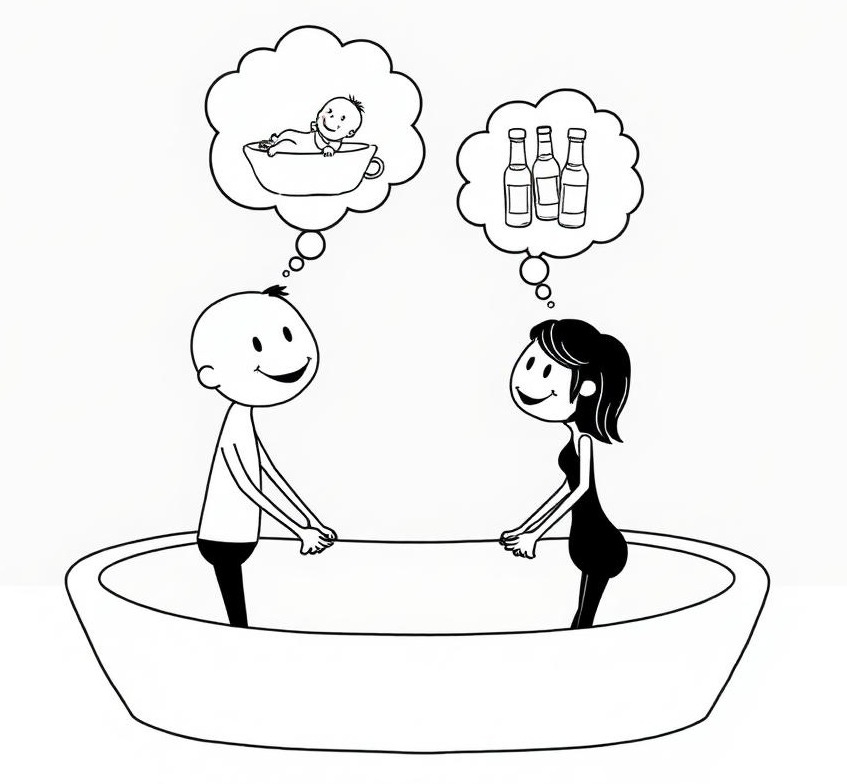
1. Purpose drives a system, down to which components are needed and which become irrelevant, rewiring interconnections and creating new interdependencies. If you’re using your bathtub for beers at a party, suddenly the piping and faucets become irrelevant, but beer and ice become crucial.
2. It is easy to assume the purpose of a system. We are all looking at the same picture of the bathtub but have different (or multiple) intentions for it. The biggest mistake we make with systems is to assume that others share our intent, or that we are so in love with our vision that we are blind to competing ones. Purpose is not always obvious, it can be hidden or dormant.
3. Behaviours and artefacts reveal intent. A partner says, “We share chores” but habitually leaves dirty dishes in the sink. An organisation says, “We trust our people” install facial recognition software to track attendance. Good system thinkers don’t focus on what people say, they focus on what people do.
How do we apply these lessons to new leadership?
Firstly, meaningful change requires clarity of purpose. Leaders want to swoop in and make sweeping changes, only to encounter 101 reasons why they cannot be done. The smart employees will make cosmetic changes to satisfy at the surface, quietly keep their heads down knowing that they will wait out the leader until he/she leaves, to be replaced by another one who does the same and then the whole cycle repeats itself. The system has an incredibly resilient way of staying stable.
Without purpose, the components don’t change. And I don’t mean a nice-sounding new “Vision and Mission” statement that took a steering committee 6 months to craft a bunch of jargon strung together.
Clarity of purpose requires taking a good hard look at the raison d’etre of your organisation/ team, or it’s reason for existence. How has the world changed around you? How have your users changed? What does the future look like? How can you show up differently for your stakeholders? What role should you play?
Answer that, then now you have a good reason to put in place new operating systems and capabilities.
Secondly, purpose is a journey shared and lived, not a mandate. If one declares to a partner that the bathtub can only be used for storing buckets, I’d imagine that would not go down well. But hey Agnes – doesn’t this contradict what you said earlier about clarity of purpose? There’s an incredibly fine line between dictating a purpose that is not shared and hence rejected (system stasis), and uniting the organisation against competing purposes (system chaos).
How do we build a shared purpose? I invoke my glamorous ex-boss – we listen and we watch. We exercise patience. We ask our team members: “what matters to you?”
My greatest leadership test was very early on in my career before hitting 30. I was sent as a General Manager of grassroots community organisation of 100 staff and 3 very experienced deputies. For context, this organisation was a designated training post for young Administrative Service officers, meant for us policy wonks to get a better sense of ‘the ground’. The posting was limited to 2 years, and as a result the management team who were career community managers had cycled through several GMs.
On Day One, one of the deputies asked me with a glare: “So – what do you want your legacy to be?”
I was completely unprepared. Later I had learnt that the team was burnt out by previous demands. Then the subtext of the question made sense: you’re going to come in with your Big Ideas even though you have no experience, have us scurry around trying to carry out your changes, and before we can implement anything you’d leave.
I muttered something along the lines of “I hope to leave this organisation better and stronger, whatever that may be.” I sounded lame.
In the next few months, I dedicated myself to finding the “whatever”. The best insights are not revealed in meetings but over lunches and coffees. Every day for a month I would ask my deputies out for lunch, and every day for a month they would reject me. They finally relented when they realised I won’t go away. Bit by bit, they shared with me their challenges. I asked them, “what matters to you?”
There’s no hero story here. There was no big moment that led to a magical transformation. But we did a lot of meaningful work as a team, instituted some important programmes for the community, and most importantly had fun doing so. We shared the journey. Many of them are still my friends today.
Here’s my message to anyone who finds themselves in a new leadership position: your first leadership act is to uncover Purpose. Resist the urge to tinker with the components. Yes you come with experience, but what has worked before may not work now, if your current system serves a different purpose.
Till next time,
Agnes


